
Rosh Hashanah is the Jewish New Year. The word rosh means ‘head’ and hashanah means ‘the year’ – so the holiday celebrates the head/beginning of the year.
Rosh Hashanah is the first of the month of Tishrei (the 7th month of the Jewish calendar). The month of Elul is the sixth month – and leads up to Rosh Hashanah. The Jewish and secular calendars don’t line up, so Rosh Hashanah moves around in the secular calendar; it usually falls in September (and sometimes August). Jewish holidays always start in the evening. In 2008, Rosh Hashanah is on the evening of September 29th and during the day of September 30th.
There are actually four new years in the Jewish calendar:
The 1st of the month of Nisan is the New Year for bureaucratic state purposes.
The 15th of the month of Elul is the New Year for establishing agricultural tithes.
The 15th of the month of Shevat (Tu B’Shevat) is the New Year of the trees.
The 1st of the month of Tishrei is Rosh Hashanah – when Jews celebrate the New Year.
There are certain foods associated with Rosh Hashanah. Some people eat apples (which are round, like the year) dipped in honey (for a sweet new year). Some also buy challah that is round in shape – again symbolizing the cycle of the year. Sometimes there are raisins in the challah to add to the sweetness of the new year.
There are different greetings that you’ll hear people say on the holiday. One is Shanah Tovah – which simply wishes you a good year.
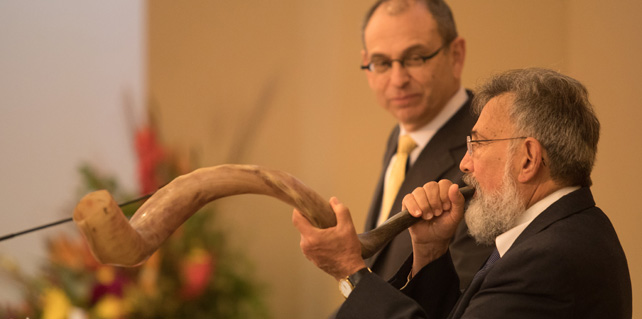
Another tradition on Rosh Hashanah is the blowing of the shofar – a horn of a ram or other animal. It is traditionally sounded every morning for the month before Rosh Hashanah, and then on Rosh Hashanah morning and on the beginning of Yom Kippur. There is a special way it is sounded – someone calls the names of the sounds and someone else blows the horn. Usually, tekiah means 1 blast, shevarim means 3 blasts, and teruah means 9 short blasts (although some people do more than 9). The tekiah gedolah is the final sound on Rosh Hashanah and Yom Kippur – and is one long sound.